
Defense Sector Review

DISCLAIMER: This note is intended for US recipients only and, in particular, is not directed at, nor intended to be relied upon by any UK recipients. Any information or analysis in this note is not an offer to sell or the solicitation of an offer to buy any securities. Nothing in this note is intended to be investment advice and nor should it be relied upon to make investment decisions. Read our full disclaimer, here.
Analysis by Alex King, CEO, Cestrian Capital Research, Inc. + Claude CoWork
Defense stocks in the main peaked in early March before the bulk of missiles began flying in the Gulf. Here’s $XAR, the defense sector ETF.
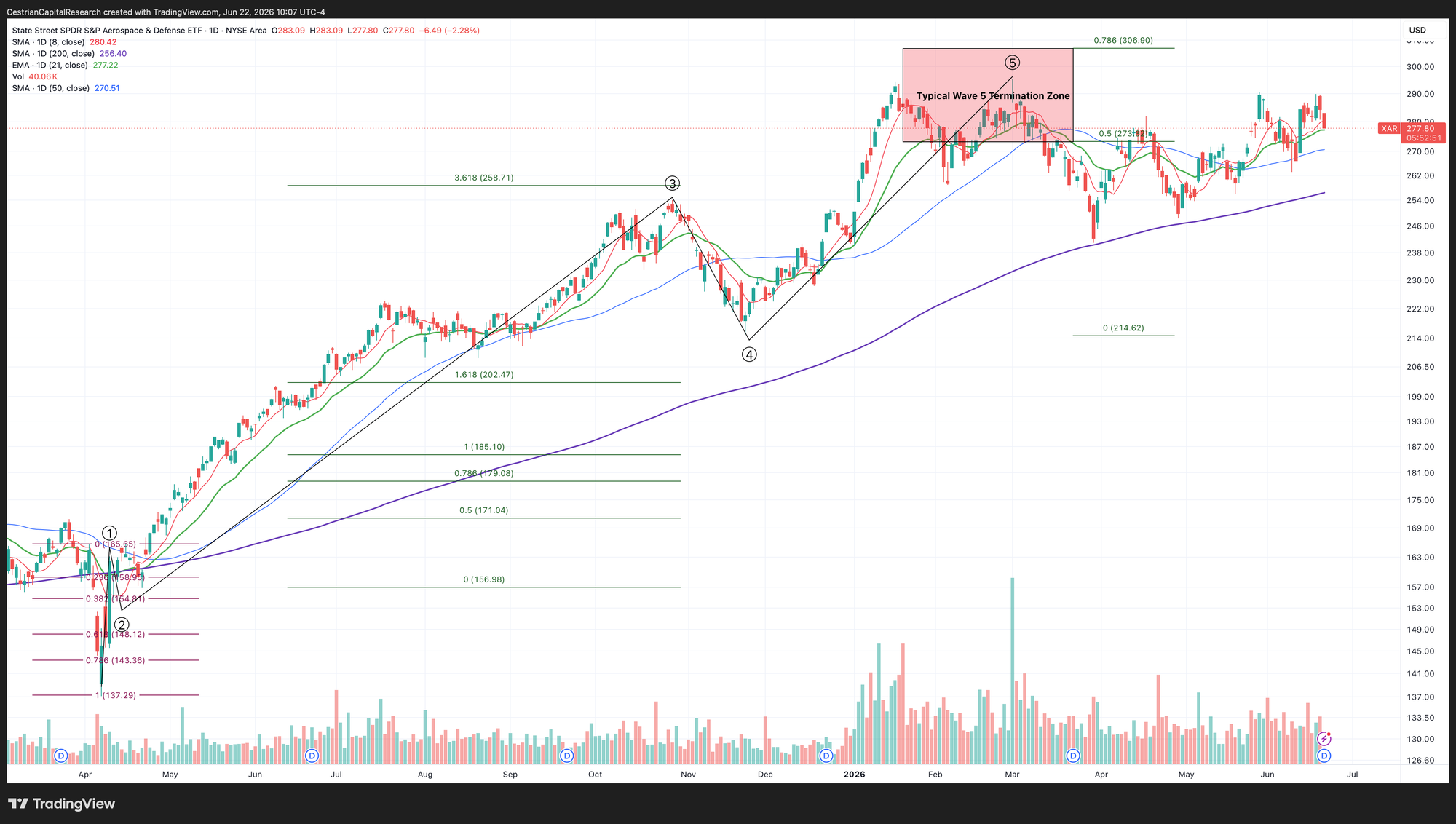
Lockheed Martin ($LMT) climbed roughly 40% from the start of 2026 as the confrontation with Iran escalated. Then the US and Israel opened the 2026 Iran war on February 28, and from there the sector went the other way. The iShares US Aerospace & Defense ETF ($ITA) fell about 12% from the start of March; RTX dropped more than 11% and Lockheed more than 13% in the wake of their earnings. When Washington and Tehran signed a memorandum of understanding on June 17 declaring an end to hostilities, the sector sold off again — Lockheed down around 4% on the day, dragging RTX, Northrop, General Dynamics, L3Harris and Boeing with it. Peace, it turns out, is bad for the price of war stocks. At least in the short term.
Time To Accumulate Defense Names?
It may be time to begin to accumulate these names once more. The fundamental backdrop for defense spending has not deteriorated one bit; if anything the Iran war reinforced it. What has deteriorated is sentiment, which is the thing that tends to wash out near lows rather than highs. When a sector sells off on good news (a ceasefire) while its order books keep climbing, the disconnect can be an opportunity rather than a warning.