Market On Open, Tuesday 27 January

DISCLAIMER: This note is intended for US recipients only and, in particular, is not directed at, nor intended to be relied upon by any UK recipients. Any information or analysis in this note is not an offer to sell or the solicitation of an offer to buy any securities. Nothing in this note is intended to be investment advice and nor should it be relied upon to make investment decisions. Read our full disclaimer, here.
The Dollar In Crisis?
by Alex King, CEO, Cestrian Capital Research, Inc.
The mighty U.S. Dollar is at something of a crossroads right now. It’s not dying the thousand deaths that some commentators would have you believe, but it is sat at 2-yr support levels.
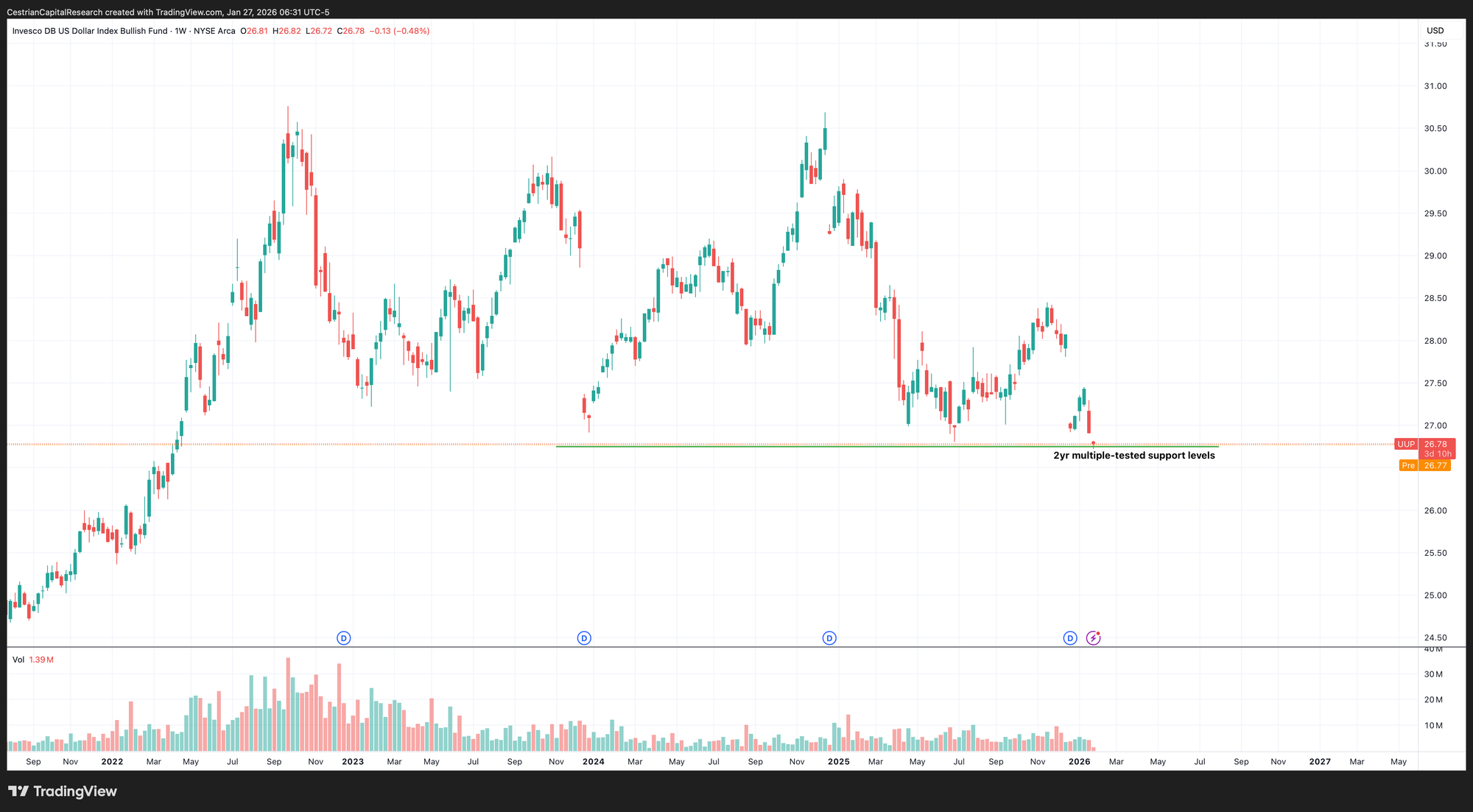
Currency strength is a unique challenge for the US. A weak dollar means a boost in exports which would help to rebalance the country-by-country trade deficits that concern this Administration. But the whole reason the dollar is strong in the first place is because of high demands for U.S. securities - bonds, stocks, ETFs - and other assets such as real estate - all of which can only be purchased in U.S. dollars. A strong dollar allows the US to run large deficits which in other countries would not be possible because that country’s bonds would dump. In the US, demand for Treasuries as a kind of global reserve fund is what keeps the USD in line.
It is possible that the selling of US Treasuries we have seen amongst some European holders this last week or two continues. It is possible that the Don’t Buy American thing takes ahold. I don’t know, these things are beyond the scope of this service. But if I had to guess I would say that US Treasuries and the US Dollar will be fine. I think that the global economy has some problems and that as things get tricker, capital will flow back into Treasuries. If there were pan-EU sovereign bonds available, perhaps they would offer some competition and the Euro would strengthen structurally vs. the greenback. But there are not, and so for now, I don’t think it will.
Disturbances in FX right now have more to do, I think, with the Japanese bond market - meaning the base rates set by the Japanese central bank - than they do with domestic US politics.
If you’d like to try to benefit from this volatility, consider joining our SignalFlow AI Global algorithmic service. It helps you rotate capital through leading ETFs from about 30 countries from around the world. If the dollar weakens, these international equity ETFs should do very well. If the dollar strengthens, the algo will likely get you back into the S&P500.
Launch pricing ends 31 January so if you are interested, sign up in January to lock in the current low prices for as long as you remain a subscriber. From 1 February, prices double.
You can read all about it here.
 Alex King
Next up, our daily market analysis note for our Inner Circle members.
Want our best work? Join us.
Join The Cestrian Inner Circle.
 Alex King