
The Future Of War, Part Deux - One Stop Systems (OSS) Q4 FY12/25 Earnings Review
DISCLAIMER: This note is intended for US recipients only and, in particular, is not directed at, nor intended to be relied upon by any UK recipients. Any information or analysis in this note is not an offer to sell or the solicitation of an offer to buy any securities. Nothing in this note is intended to be investment advice and nor should it be relied upon to make investment decisions. Read our full disclaimer, here.
Background: New Defense Stocks To Buy Now
The next move from power is to enclose the better-cheaper-faster-more into the leading defense systems. We will see a series of IPOs in the next year or so from companies doing exactly that, the leader of which is Anduril Industries. In advance of this, there are a number of stocks already available on public markets which offer some exposure to this theme. We detailed a number of them in this recent post:
 Alex King
With that in mind, let’s turn to One Stop Systems (OSS).
$OSS (One Stop Systems, Inc.)
by Alex King, CEO, Cestrian Capital Research, Inc, + Claude CoWork
Sector: Technology / Rugged Edge Computing & AI Infrastructure
Market Cap: ~$220M Last Price: ~$9.10 (as of late March 2026)
OSS Products
One Stop Systems designs and manufactures high-performance computing hardware purpose-built for deployment at the "rugged edge" — environments where you need data center-class compute power but can't be anywhere near a data center. Think the inside of a patrol aircraft, a combat vehicle, an autonomous mining truck, or a drone operating in contested airspace. OSS claims to take the latest commercial GPU, FPGA, and NVMe technologies — the same acceleration platforms that power hyperscale cloud data centers — and to re-engineer them into compact, ruggedized, form factor and cost-optimized systems that can survive shock, vibration, extreme temperatures, and altitude.
The product portfolio spans ruggedized servers (including liquid-cooled short-depth models), GPU compute accelerators, high-density flash storage arrays, PCIe expansion systems, ruggedized Ethernet switches, and the company's Ion Accelerator software suite for SAN/NAS and data recording workflows. These company claims that these products enable AI inference, sensor fusion, electronic warfare, and autonomous capabilities at the point of need. Revenue comes primarily from hardware sales — both custom-designed platforms built to customer specifications and standard ruggedized products — along with recurring support and software licensing. The customer base is heavily weighted toward U.S. defense primes and the DoD directly, with a growing commercial segment in autonomous vehicles, construction/mining equipment, and aerospace.
Until December 2025, OSS also operated Bressner Technology GmbH, a European contract manufacturing subsidiary acquired in 2018 for ~$5.6M. Bressner had grown to ~$33M in trailing revenue but was a lower-margin, non-core business. OSS sold it for $22.4M, banking the gain and sharpening the company's focus entirely on its high-margin rugged edge AI franchise. Post-divestiture, OSS is a pure-play rugged edge compute company.
OSS Market Position & Competitive Landscape
OSS occupies a specialized niche at the intersection of two large and growing markets: defense electronics modernization and edge AI infrastructure. The company is small but well-positioned — it competes against other rugged computing integrators like Crystal Group, Core Systems, Rave Computer, and Systel, but claims to differentiate on engineering depth; for instance it claims that form factor optimization, advanced cooling technologies (including liquid cooling for GPU-dense systems), and ultra-low latency interconnect fabric are genuine technical differentiators.
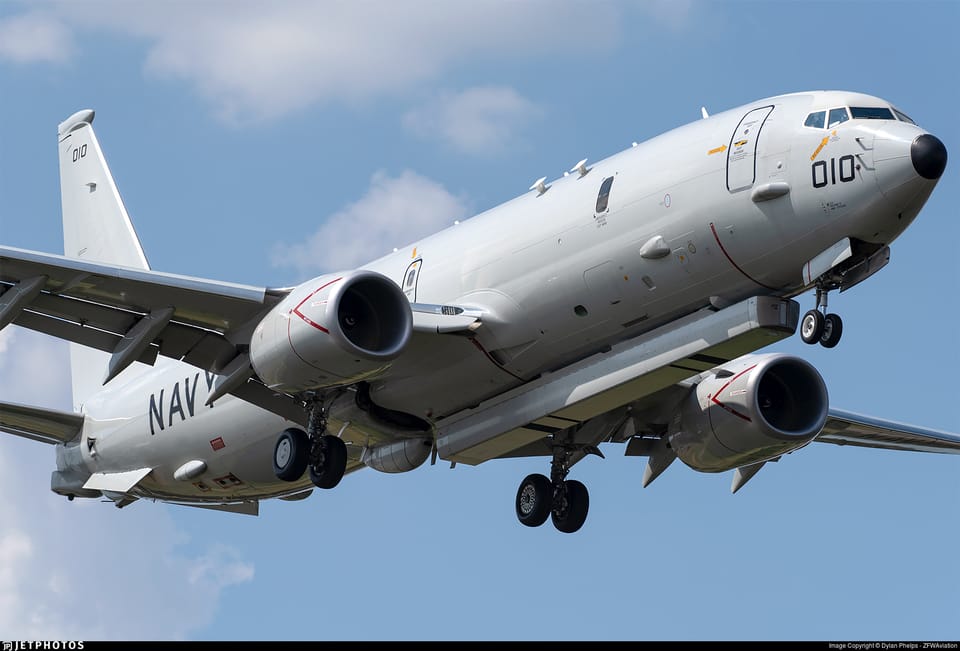
The broader competitive context includes the defense primes themselves (Lockheed Martin, Northrop Grumman, L3Harris) who have internal computing divisions, and on the commercial side, companies like NVIDIA's embedded platforms (Jetson/Orin), Dell's rugged portfolio, and various industrial PC manufacturers. OSS's claimed advantage is speed — it says it can take the latest commercial GPU platform and deliver a ruggedized, deployable system months or years before the primes can work it through their own qualification cycles. The P-8A Poseidon program, with over $65M in lifetime contracted revenue, is the primary proof point proffered by management.
OSS Financial Profile
OSS just closed a transformative year. Full-year 2025 continuing operations revenue (ex-Bressner) was $32.2M, up 31.2% YoY from $24.6M. Q4 2025 was the standout quarter: $12.0M in revenue (+70.2% YoY), a record 58.5% gross margin, and $2.0M in net income from continuing operations — the first meaningful profitability the company has reported. That Q4 margin is striking and reflects the mix shift toward higher-value defense and custom compute platforms.
The balance sheet is clean. OSS ended 2025 with $31.2M in cash and $45.3M in working capital, bolstered by the Bressner sale proceeds. No material debt burden. For 2026, management is guiding 20-25% revenue growth (implying ~$39-40M), ~40% gross margins (a step down from Q4's 58.5% but well above the historical average), and positive EBITDA — which would be a first on an annual basis. At ~$220M market cap and ~$32M in trailing revenue, the stock trades at roughly 6-7x EV/Revenue, which is a premium for a sub-$50M revenue hardware company but reflects the defense AI optionality and the margin inflection story.
OSS Recent Developments
The Q4 2025 earnings report (March 18, 2026) was the catalyst — the 70% revenue growth, 58.5% gross margin, and return to profitability significantly exceeded expectations. Roth/MKM raised its price target to $9 from $8 following the results. The Bressner divestiture (closed December 30, 2025) cleaned up the business model and gave OSS a war chest relative to its size.
On the contract front, OSS has been stringing together wins: $10.5M in new P-8A Poseidon awards (bringing lifetime program revenue past $65M), a $1.2M U.S. Army contract for ruggedized GPU-accelerated compute for combat vehicles (a new defense prime relationship), a $1.1M initial order for ruggedized Ethernet switches for next-gen in-flight entertainment (potential $6.5M pipeline), and a new commercial win with a leading autonomous construction/mining OEM (~$2M in 2026, with a $10-15M five-year pipeline). The breadth of these wins — Navy, Army, commercial aerospace, autonomous vehicles — suggests the platform is finding product-market fit across multiple verticals.
OSS Investment Thesis Summary
The bull case: OSS has hit an inflection point. Revenue is accelerating (70% Q4 growth), margins have structurally shifted higher with the Bressner divestiture and defense mix, and the company just turned profitable. The defense AI tailwind is real and durable, the P-8A program provides a recurring revenue base, and new contract wins across Army, commercial aerospace, and autonomy are expanding the TAM. With $31M in cash and no meaningful debt, the company has the balance sheet runway to scale without dilution. If 2026 guidance holds and gross margins sustain near 40%+, this is a micro-cap defense AI play growing 20%+ with positive EBITDA.
The bear case: OSS is still a sub-$50M revenue hardware company with meaningful customer concentration risk — the P-8A program alone represents a large share of the backlog. Gross margins swung from 14.1% in FY2024 to 58.5% in Q4 2025, which is a spectacular improvement but also raises the question of sustainability — one bad quarter of mix or an inventory charge could crater margins back to earth. The stock at ~7x revenue already prices in substantial growth, and defense procurement cycles are notoriously lumpy. The commercial segments (autonomous vehicles, mining) are promising but early-stage, and the competitive moat — while real in terms of engineering speed — is not structural in the way a software network effect would be.
Want our take?
Let’s look at the numbers, the valuation, stock chart and rating.